

Why Modern Radiators Usually Can't Be Repaired

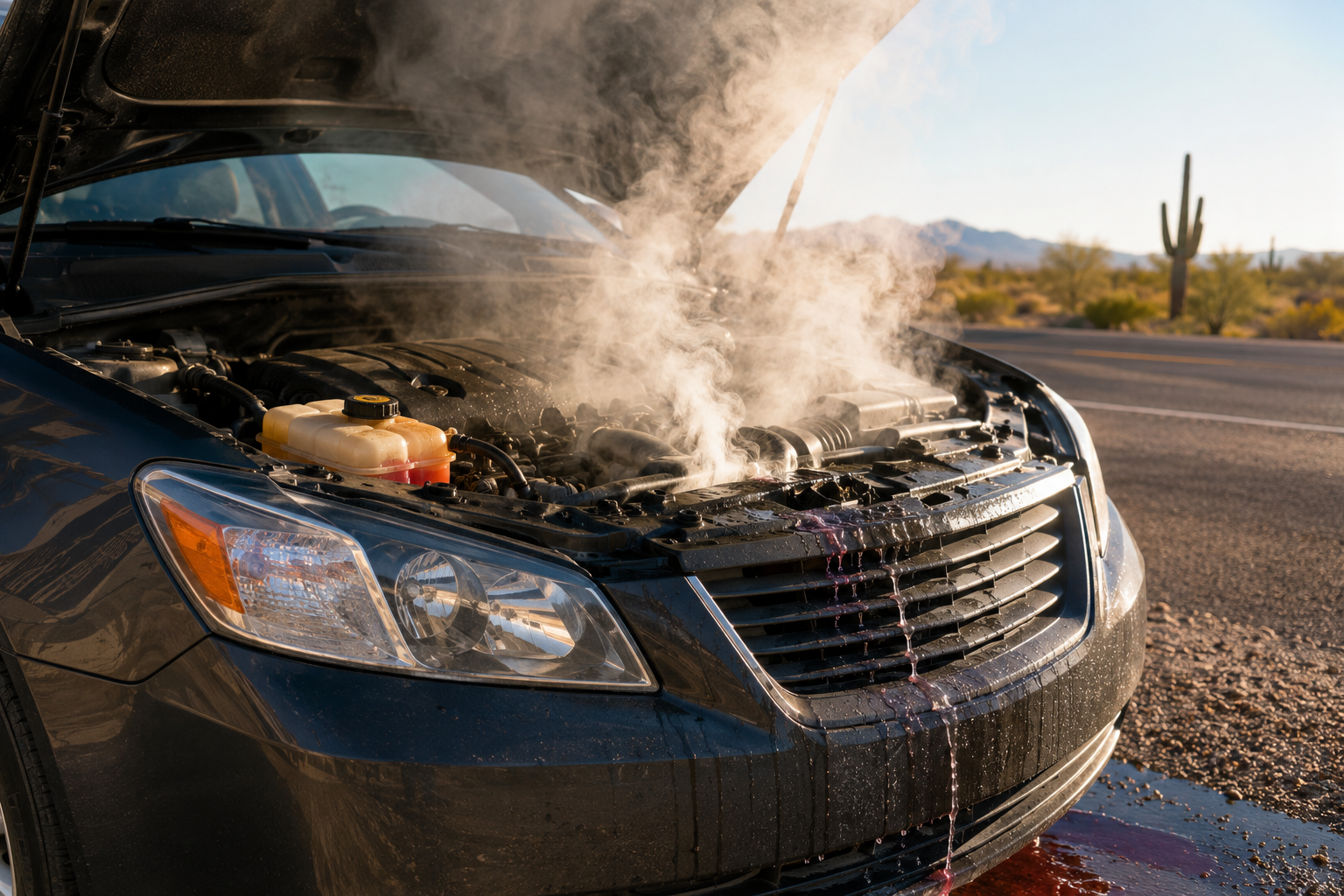
Every summer we see it happen.
A vehicle arrives on a tow truck after overheating on the freeway. The driver opens the hood, points to the radiator, and asks a question we hear all the time:
“Can you just fix it?”
Years ago, the answer might have been yes.
Today, the answer is usually no.
Radiators Have Changed
Older vehicles often used all-metal radiators that could sometimes be repaired.
Small leaks could occasionally be soldered or welded. In some cases, a radiator shop could rebuild portions of the radiator and keep it in service.
Modern vehicles are different.
Most radiators today use an aluminum cooling core combined with molded plastic side tanks.
These plastic tanks help reduce weight and manufacturing costs, but they also create a common failure point.
Where Modern Radiators Usually Fail
One of the most common radiator failures we see is cracking along the seam where the plastic tank meets the aluminum core.
Arizona heat makes the problem worse.
Over thousands of heating and cooling cycles, plastic becomes brittle. Pressure builds inside the cooling system, and eventually a crack develops.
At first, the leak may be small.
Then one hot afternoon it becomes a major problem.
Why Repairs Usually Don't Last
Many drivers hope a leaking radiator can be patched.
Unfortunately, once the plastic tank cracks, repairs are rarely reliable.
The crack often continues to grow.
Even if a temporary repair appears successful, the surrounding plastic has already weakened from age and heat exposure.
In most cases, replacing the radiator is the safest and most cost-effective solution.
Arizona Is Especially Hard On Cooling Systems
Your cooling system works harder in Arizona than it does in many parts of the country.
Summer temperatures routinely exceed 110 degrees.
Stop-and-go traffic increases engine temperatures.
Long freeway drives create constant heat cycles.
All of that stress accelerates wear on radiators, hoses, water pumps, and other cooling system components.
Signs Your Radiator May Be Failing
Watch for:
- Coolant leaking under the vehicle
- Low coolant levels
- Sweet smell from under the hood
- Engine temperature running higher than normal
- Steam from the engine compartment
- Visible cracks in the radiator tanks
If you notice any of these warning signs, it's best to have the cooling system inspected before a small leak becomes a roadside breakdown.
Don't Wait For A Tow Truck
Many radiator failures don't happen in the shop parking lot.
They happen on the Loop 101.
They happen on the US-60.
They happen during summer traffic when temperatures are at their highest.
A small radiator leak today can quickly become an overheating engine tomorrow.
At CarLife Auto Repair, we inspect, diagnose, and replace failing radiators before they leave drivers stranded on the side of the road.
If your vehicle is showing signs of a cooling system problem, schedule an inspection before Arizona summer turns a small leak into a major repair.
Ready to request your next appointment with CarLife?
Please select a CarLife location below to fill out your appointment request form.
Visit our two locations in the greater Phoenix area.
Proudly servicing in Scottsdale & Gilbert.


Scottsdale
8830 E Talking Stick Way, Scottsdale, AZ, United States
Call us: (480)-270-5930
or Text Us: (480)-725-7788
Mon - Fri: 7:30 AM - 5:30 PM | Saturday - Sunday: Closed

Gilbert
4461 E Baseline Rd, Gilbert, 85234, AZ, United States
Call us: (480)-800-3171
or Text Us: (480)-725-4590
Mon - Fri: 7:30 AM - 5:30 PM | Saturday - Sunday: Closed